Friday, 27 April 2018

What types of startups does India need today?

In market any thing you launch and engaged people to uses you product its make you successful. But for India I recommended to every start up to try to do manufacture goods. why we buy from other country? we are capable to do manufacturing every thing. Its benefit for your country.

  • Instant access to healthcare
One of the most critical needs today is access to good healthcare. Billions around the world, particularly people in the Indian subcontinent, struggle because they do not get proper access to healthcare. Even those with access have a sour experience. We have apps that let us book movie tickets and seats in a jiffy or even find that perfect restaurant! However, finding doctors is still unbelievably tough. Patient records are either maintained in fat files or if they are online, they are often not accessible or understandable. Doctors do not usually have the time to go through all the reports and this may lead to a compromise on the health front.
  • Public transportation
  • Sanitation
Lack of sanitation is a major problem in developing countries like India. Much deliberation has given way to the fact that the private sector is needed to tackle sanitation service problems. It is imperative to invest in solutions by offering different sanitation products and services at appropriate prices. Sulabh is a glaring example of a startup that began work in this area and has today raised the benchmark for many others in this field
  • Waste management
Urban areas of India generate 1,88,500 tonnes of municipal solid waste (68.8 million tonnes per year), and waste generation increases by 50 percent every decade. More than 80 percent of this waste reaches open dumpsites causing public health issues, environmental degradation, and resultant climate change. Plastic and e-waste form the major chunk of this waste, with minimal facilities to take care of such environment degrading substances. India needs to find solution to these problems. Fresh and innovative ideas in consonance with the ambitious Swachh Bharat Abhiyan are required to solve this problem, which otherwise can have drastic repercussions in the near future. Use of technology and devices to control and use waste to make for reuse.
  • Pollution
Startups are now making a beeline to address this issue and they are the best in the field both in terms of technology and intelligence. Smart Air Filters, a Delhi-based startup, produces an indoor air purifier that is highly effective against PM 2.5, the primary air pollutant affecting urban Indian cities. This PM 2.5 results from combustion, such as exhaust from cars and trucks (diesel and petrol), coal production, and other biomass burning.
  • Easy access to quality education
startup to create such idea to remove thinking of become labors or robots to smart human. we want such institution who work to change the thinking of learner or students from a slave to a leader. India want such a people who remove traditional ways of learning and involve industrial, practical and innovative things for student by which their skills were developed.
  • Electricity
A simple device like an incubator needs continuous supply of electricity. In smaller towns, particularly for hospitals catering to old people and new born babies, electricity cannot be a major impediment. It has to be a way ahead. Innovating products and services around the conditions prevailing in the country is the need of the hour. One such condition is unreliable and fluctuating power, particularly in the rural and semi-urban clusters. This does not need any fundamental technological breakthrough but innovative solutions.
There are problems related to phase balancing, overload, and loss in the distribution network as a whole. A Bengaluru-based startup has come up with an innovative product that guarantees zero power loss due to theft and commercial reasons. The product designed by them enables peak reduction without causing any inconvenience to customers. It also eliminates the need for power cuts and automates the entire power distribution, billing, and payment processes.
  • Access to clean drinking water
In most semi-urban areas of India, the tap gets water every two to 10 days. However, mostly it is difficult to say which days. Another point to ponder is whether this water is fit for human consumption or not. Access to clean drinking water is one of India’s biggest challenges. A growing population, rapid urbanisation, and the growing demand for water from agriculture, energy, and industry are the other contributing factors. According to UNICEF, only a quarter of the total population in India has drinking water on their premises and nearly three-quarters of all diseases in India are caused by contaminants in the water supply.
As an example, P. Lakshmi Rao, a self-made entrepreneur, has decided to ensure that people have access to clean drinking water. In November 2015, she launched the water ATM facility, where people can draw a litre of clean water for as little as Rs 5. This water ATM purifies the water extracted from ground water and municipal corporation water. It is no ordinary purifier. The machine follows a seven-stage water purification process.
Startups are the right platform for innovative solutions that can provide access to clean water in the country.
Do survey of your area and Start according to need of people

source:  click here

Friday, 30 March 2018

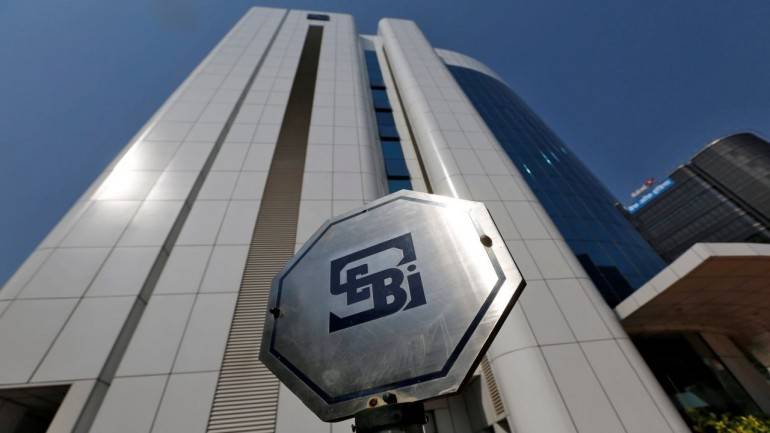
SEBI may ease norms for companies filing for bankrutpcy


The markets regulator may finalize all norms within the next two to three months


The Securities and Exchange Board of India (SEBI) has released a discussion paper, seeking public views regarding compliance with SEBI regulations by listed entities undergoing bankruptcy proceedings.

In the discussion paper, SEBI has addressed disclosures, trading on stock exchanges, material related party transactions, reclassification of promoters, compliance with the minimum public shareholding requirement and delistings pursuant to resolution plan or liquidation. The markets regulator may finalize all norms within the next two to three months.

SEBI has divided insolvency proceedings into three distinct stages — The period before an application to initiate bankruptcy proceedings is admitted by National Company Law Tribunal (NCLT); stage two is from the time NCLT admits the application till the time the resolution plan is approved by NCLT. Stage three is the period when the plan as approved by NCLT is being implemented.

Pre-insolvency stage

Currently, there are no specific disclosure requirements pertaining to filing or admission of an application for initiating CIRP. The regulator has proposed that a company should inform them regarding exchange of price-sensitive information — filing of application by a corporate entity or creditors against a corporate debtor for initiation of CIRP, the amount in default as stated in the application, receipt of demand notice or a copy of invoice demanding payment of the amount involved in default.


Post-insolvency stage


Within the current framework, all material related party transactions (RPTs) require the approval of shareholders through a resolution. Related parties are required to abstain from voting on such resolutions. However, SEBI sought public comments on Listing Obligations and Disclosure Requirements (LODR) regulations being amended to clarify that shareholders’ approval will not be required if a listed corporate debtor undertakes material RPTs as part of a resolution plan approved by NCLT.

Dealing with assets of material subsidiary

Selling, disposing and leasing of assets amounting to more than 20% of the assets of a material subsidiary on an aggregate basis during a financial year shall require prior approval of shareholders by way of a special resolution. SEBI is planning to dilute this requirement and has sought comments from the public on the same.

Reclassification of promoters

The declassification order of ArcelorMittal has sparked a debate on how the procedure works. The current framework of SEBI stipulates that increase in the level of public shareholding pursuant to re-classification of a promoter shall not be counted towards achieving compliance with the minimum public shareholding requirement.

SEBI received representation that in terms of resolution plan approved by NCLT, the existing promoters may be diluted to an extent that they may not be left with any significant shareholding and/or control in the listed corporate debtor. In respect of such cases, relaxation of the conditions prescribed under Regulation 31A of LODR Regulations has been sought for re-classifying such promoters as public shareholders.

It has also been suggested that such reclassified shareholding should be permitted to be counted towards achieving compliance with the minimum public shareholding requirement.

Compliance with minimum public shareholding requirementA listed entity shall comply with the minimum public shareholding requirements. However, as part of implementing the resolution plan, if the public shareholding falls below the level of 25%, then the listed corporate debtor may be granted 2 years' time instead of the current 1-year period, to achieve compliance with the minimum public shareholding requirement of 25%.

Tuesday, 27 February 2018

IT Returns – Guide for e-Filing of Income Tax Return (ITR) Online


As per section 139(1) of the Income Tax Act, 1961 in the country, individuals whose total income during the previous year exceeds the maximum amount not chargeable to tax, should file their income tax returns (ITR).

Thursday, 22 February 2018

GST e-way bill system may get implemented from March 7

Besides, the prime rule of securing an e-way bill while ferrying goods worth more than Rs 50,000 within or outside a state through prior online registration of the consignment may be tweaked for the time being


GST’s e-way bill system, which promises to enable faster movement of goods through a seamless portal-driven payment system, may see the light of the day from March 7, after technical glitches aborted its mandatory full-fledged launch on February 1.

While National Informatics Centre (NIC), the government’s nodal IT procurement arm, wants to implement a foolproof e-way bill system from April 1, the finance ministry is pushing for an earlier rollout in its effort to prevent revenue leakages, a senior government official told Moneycontrol.

“We want e-way bill to be implemented from March 7, but it depends on the preparedness of the implementing agency (NIC). NIC is more comfortable if the rollout happens in April,” the official said.

The e-way bill portal crashed on its launch day—February 1—triggering howls of criticism from traders and transporters as the movement of trucks criss-crossing on highways was severely affected.

The disruption forced the GST Council, the finance minister Arun Jaitley-headed body including officials from states and centre, to push back the compulsory generation of inter-state e-way bill.

While the system for both inter and intra-state bill generation was supposed to be ready on January 16, the Council had decided that states could choose their own timings for implementation of the document for intra-state movement of goods on any date before June 1, 2018.

On February 1, the portal collapsed as it wasn’t ready to handle the large volumes of inter as well as intra-state bills that were being generated at the time.

“The portal was capable to generating only 500 bills per minute, which was way too small a capacity as compared with the traffic on the day of launch. NIC has been asked to increase its capacity to at least a few thousands so that the system doesn’t collapse again,” the official said.

The Centre has now asked states to rollout intra-state bill in a staggered manner so that it does not put immense pressure on the portal as the government’s priority is smooth and steady implementation.

Besides, the prime rule of securing an e-way bill while ferrying goods worth more than Rs 50,000 within or outside a state through prior online registration of the consignment may be tweaked, for the time being, the official said.

To generate an e-way bill, the supplier and transporter will have to upload details on the GST Network portal, after which a unique e-way bill number (EBN) will be made available to the supplier, the recipient and the transporter on the common portal.

“The idea is to declutter the portal will less number of bills and reduce the load as much as possible,” the official added.

For instance, a single transporter may have five different consignments worth more than Rs 50,0000. Yet, that transporter had to generate five separate bills despite the value of a single consignment being less than half a lakh rupee.

The responsibility of developing an e-way bill system was given to NIC in September and it was decided by the GST Council on October 6 that the e-way bill should be made compulsory beginning April 1, 2018.However, the Council met via video conference on December 16 and decided to make the rollout of all-India electronic-way bill compulsory from February 1--two months ahead of the earlier plan to mainly plug revenue leakages.